
Pomana porcului - A traditional Romanian feast
by Ovi Catanescu
Pomana Porcului - the traditional Romanian feast held after the pig slaughter
Two Friends, One Feast, and Bus 42
More than fifty years later, Mihai Conțiu and I still remember that winter day. We do not remember every detail in exactly the same way, but perhaps that is what makes the story worth telling.
It happened while we were students at a high school in Bucharest. It was the first day of our winter vacation, and our classmate Adam Virgil invited us to his home. His parents were away, but the apartment contained everything three teenage boys might consider necessary for a successful gathering.
Adam’s father was a veterinarian, and the family had recently prepared all the traditional foods that follow the slaughtering of a pig: fresh sausages, meat, caltaboș, and other rich pork dishes.
There was only one small problem.
There was no bread in the house.
Mihai and I contributed something we considered equally important: a bottle of cognac. There was also red wine in the apartment, so we had cognac, wine, and a table filled with fatty pork—but not a single slice of bread.
At our age, this did not appear to be a problem.
We ate with enthusiasm. We drank the cognac and then plenty of the wine. Music was playing, and before long we began dancing to Tom Jones. Somewhere between the food, the drinks, and our dancing, the record player—and the Tom Jones record—did not survive the celebration.
According to Mihai’s memory, part of the feast took place on the balcony. He also remembers us throwing pickled green tomatoes at people passing below. I do not remember that part quite as clearly, but knowing the three of us at that age, I cannot confidently say it did not happen.
Eventually, we realized that we had to leave.
Outside, Bucharest was covered with snow and ice. We walked carefully, laughing and trying to remain upright, toward bus 42 near Policlinica Titan.
By then, Mihai was in no condition to keep track of where he was going. Before getting off, I asked the woman collecting the fares to remind him to get off the bus when the bus will reached next stop.
“Please make sure my friend gets off where he is supposed to,” I told her.
Mihai remembers getting off the bus and somehow reaching home. After that, his memory disappears.
His sister, Rodica found him terribly pale and sick. She put him to bed and protected him from their mother, explaining that Mihai was not feeling well and needed to sleep. He remained ill for several days.
My own arrival home was not much more glorious. My mother saw me first. She understood immediately that something had happened, but she did not scold me. I went straight to bed, slept for a long time, and slowly recovered.
For almost two days, neither of us knew what had happened to the other.
When I finally went to visit Mihai, I found him as pale as I must have been. He told me how sick he had been, how his sister had put him to bed, and how she had saved him from facing his mother.
Then I asked him the question that had been troubling me:
“Were you as sick as I was?”
He looked at me, and we realized that we had both survived exactly the same disaster.
I do not think we laughed very much at that moment. We were still too weak for laughter. But over the years, the story became funnier every time we remembered it.
Today, Mihai and I may disagree about a few details: who remembered the balcony, who remembered the pickled tomatoes, exactly when the Tom Jones record met its end, and how we managed to reach bus 42 through the snow.
But we agree about the most important things: there was plenty of pork, plenty of alcohol, no bread at all—and two very sick boys who were strangely comforted to learn that neither had suffered alone.
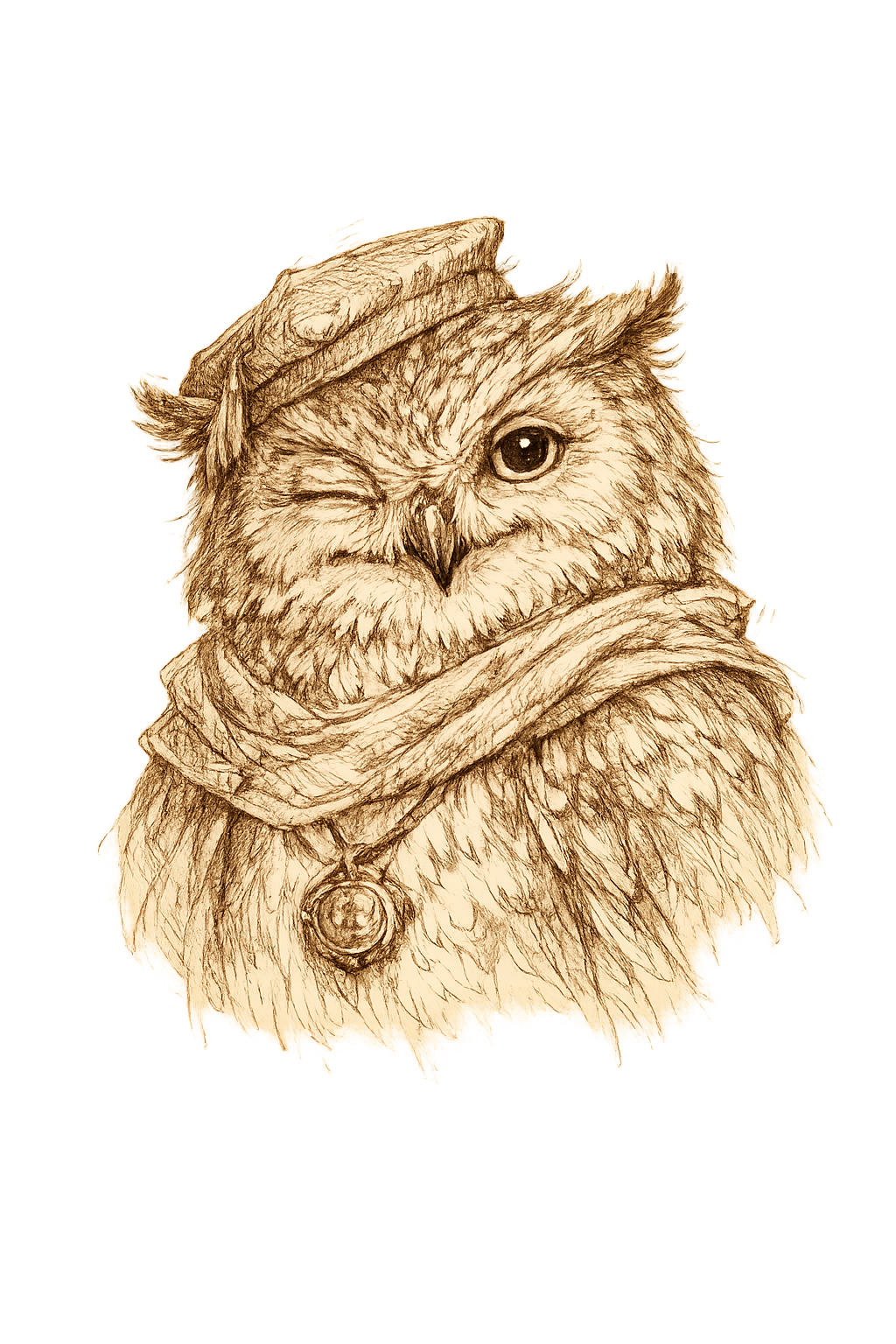
And there it is—the Owl Spit in the story:
Sometimes friendship is not rescuing your friend from a terrible decision.
Sometimes it is discovering, two days later, that he made exactly the same terrible decision you did—and survived to remember it with you.
Enjoyed this story?
Help us keep our memories alive.